{{{ title }}}
{{# subtitle }}{{{ subtitle }}}
{{/ subtitle }}
{{{ markup }}}
{{/ Thumbnail }}
{{# Mood }}
{{{ markup }}}
{{/ Mood }}
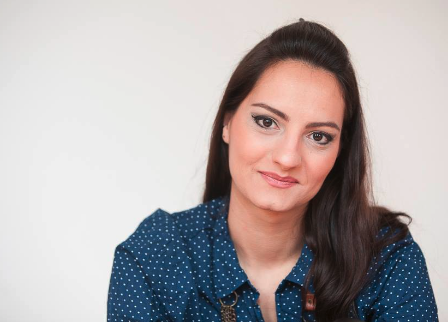
Ana Pandevska (*1985, Macedonia)–in conversation with Alexey Munipov
How did it all start?
The entire project started in 2023. The idea came from Margareta Ferek-Petrić and Christine Fischer—they were the initiators for the project, and their idea was to bring together six composers from ex-Yugoslavia. Each one of us was supposed to explore the topic of the breakup of Yugoslavia and the consequences of the breakup. We all approached the theme very differently, from political reflections to intimate and emotional memories that came not just from our experiences—because we were very young when Yugoslavia broke up—but also from memories and stories that we heard from our relatives and family. We wrote very diversely, we had different approaches to the compositions, and all those things reflect the diversity of the six republics of Yugoslavia.
My idea was to write about what was happening with my country, Macedonia, as a consequence of the breakup of Yugoslavia. I decided to call it »Mantra«, because our country’s attempt to become part of the EU has been lasting for 33 years now. All those constant talks about joining Europe was like a mantra that stuck into my head. Like an ear worm or bad TV commercial. That’s why I chose musical form of a rondo, which itself presents a circling form, a sort of loop that goes on.
Later, we added video part–with young Macedonian film director, Anastasija Lazarova Pilling, we filmed a few people talking about their experience and their memories from Yugoslavia. And then I wrote new composition, using the previous material, but in a game form, so that the seriousness of the theme converted into something ironic.
I also use a traditional Macedonian song, »Dve mi momi dve mi drushki–Lazarenki«, which is used on a traditional holiday, when kids are inviting guests inside the house. It is also kind of symbolic—we, as a small country, are trying to become a part of the European community. The song needs nasal singing, traditional Macedonian technique, and I was a bit skeptical not sure if German singers would be able to make it. But then I realized they can do almost anything. They made it sound pretty original. I was impressed–it’s a very difficult technique to learn.
I had a lot of doubts, like every composer. Is it contemporary enough? What kind of harmony should I use? Are there enough pauses so that vocalists can breathe naturally? Is there any message in it? Do I want to provoke some emotion? All kinds of questions. Also–is it boring? Then I realized that it should be boring. It shouldn’t evolve and develop into something as the story is not developing. There is no culmination in the piece for a reason, it’s like a constant loop.
Not sure, though, if I would write anything connected to this theme if not for this commission. And I would hardly return to it, too. Two pieces is enough, to be honest.
Do you feel that your childhood memories and the experience of the 90s in the Balkans shaped your identity as an artist–even if you didn’t experience the war yourself?
The most vivid thing I remember–I was about five or six–is my grandfather repeating: ‘War is coming, war is coming.’ But I couldn’t understand what that meant. I also remember the tension in my family. People were really afraid of the unknown–of what would happen next. Suddenly even everyday things were hard to get–cleaning products, anything.
My grandfather couldn’t understand how countries that were so close–that shared the same DNA–could suddenly hate each other so much. I still can’t understand it. And it’s still happening today–with Ukraine and Russia, and with wars all over the planet.
Before the war, Belgrade was the cultural centre of Yugoslavia. All the fresh ideas came from Belgrade. That has changed–now each former Yugoslav republic is trying to develop on its own and reconnect with Europe and the world.
Balkan Affairs’ is quite unique in that none of the involved composers has ever worked artistically with the Balkan wars of the 1990s–neither by personal choice nor on commission. Why do you think this subject has remained so untouched by contemporary composers from the region?
I can’t say for others, but maybe it’s some trauma, the urge to put things behind and look forward. If not for this project, I would never compose these pieces. We’ve been talking about it at home and we’ve been through that, but I’m not sure I would ever write something about it.
I also wonder–how did it feel when you all gathered in one room? Was there any tension or unease?
We are all very different as individuals, but we see this as a creative process. We mostly talk about artistic questions–not politics. I didn’t feel any tension. Quite the opposite. As the project continues, we’re getting closer and closer.
In your opinion–how much time needs to pass after a war before artists from the region can start working with it? Is 25 years a realistic minimum–as in the case of ‘Balkan Affairs’?
When the war ends, you need a lot of time. It is all stupid politics. I can’t believe people genuinely hate each other so much. I cannot accept that this is »the nature of things«.
Did you discuss this piece with your parents–and how did they react?
When my mother saw the video I made, she became very emotional, her eyes filling with tears. For me it was not so emotional–there were no traumatic scenes, just people remembering how connected life was, how open and simple things felt, how a middle class existed–not only poor and rich. But it touched her. She was in her forties when Yugoslavia broke up. She misses those times.
There was no war in Macedonia itself. People were killed elsewhere–in Croatia, Serbia, Bosnia. But we all have relatives somewhere. Some of us composers have mixed families. My grandfather is Montenegrin, my grandmother Macedonian, my father Macedonian, my mother was born in Kosovo, so I have relatives all over Yugoslavia. We are all deeply interconnected. In the countries with more direct victims, people are more likely to look only forward and forget. In my family, the memories of Yugoslavia are mostly beautiful–there is nostalgia.
During my research I also talked to younger people–born in 2009–thinking they would know nothing. Quite the opposite–they knew everything and more. That changed my opinion about the new generation completely.
Do you think a project like this can actually change anything–or make a difference, even in a small way?
If nothing else, there will be more projects. We will meet again. The audience will think about what they heard or saw. The message will spread slowly. Even if the audience doesn’t change much–the project changes us. The singers and Christine Fischer learned so much about ex-Yugoslavia. Now they know more than me!
| {{{ content }}} |
|---|
| {{{ content }}} |
| {{{ content }}} |
| {{{ strings.konzerte }}} | {{{ strings.unterstuetzer }}} | {{{ strings.regulaer }}} | {{{ strings.ermaessigt }}} |
|---|---|---|---|
| 35€ | 25€ | 14€ | |
| 28€ | 18€ | 10€ |
| {{{ strings.festivalpass }}} {{{ strings.beinhaltet_alle_konzerte_ausser }}} |
{{{ strings.unterstuetzer }}} | {{{ strings.regulaer }}} | {{{ strings.ermaessigt }}}* |
|---|---|---|---|
| 298€ | 208€ | 110€* |